Showing posts with label Polyptych. Show all posts

Saturday

Index for Category - Polyptychs

This page last updated on 12/26/2017


What is a Polyptych? Similar to a diptych, which is a photograph that uses two different or identical images side by side to form one single artistic statement, and a Triptych that uses three pictures, a polyptych uses more than three pictures to tell a story or perhaps show more than one facet of an object, place or person. The parts may be from a single picture split in four or more sections, or four related pictures that are designed to be shown together, or four seemingly unrelated pictures that have been put together at the decision of the artist. The images can literally be in contact with each other, or separated by a border or frame. If an image can  speak a thousand words, then can four or more (a Polyptych) be better than one?


Click A Title To View
Bottle House - Rhyolite, NV
Town Jail - Rhyolite, NV
Blake Smith - Hiking Partner & Friend
Walking Box Ranch - Searchlight, NV
Chlorides Most Famous Truck - Arizona
Bank of John S Cook & Company Bank - Rhyolite, NV
1917 Cadillac Type 55 Phaeton
Exposed
They Just Keep Rolling Along
Halloween-Polyptychs
1963 Stingray
Grand Canyon Railway
Mosaic Marble Floors at the Bellagio Conservatory

Friday

Chloride’s Most Famous Truck

Chloride Car
A visit to the defunct mining town of Chloride Arizona will provide you with numerous opportunities to view examples of some quite funky homemade yard art. Some front yards showcase collections of bottles, cowboy boots or license plates, while others are full of old farm and mine machinery. Though many of these are quite unique, I found this very unusual antique truck parked outside of a bar on main street to be the most interesting find. Its owner, who look to be as old as the truck, was sitting in a chair on the outside porch of the bar jawing with a fellow patron. Though I didn’t see it drive in, I know it runs as we observed it at another location while we were driving around town. In a brief talk with the owner, he noted that he paid $127 dollars for it when he was a junior in high school. If you take a careful look you will find that it is decorated with dozens of items including a fireman's hat, two canteens, U.S. Military ammo boxes, military gas cans, a funnel oil can, a mining lights, two gold panning pans, a shovels, hydraulic jack, two shifters, horseshoes, and a variety of decorative flowers, beads, trinkets and several American Flags.

Saturday

Walking Box Ranch - Searchlight, NV


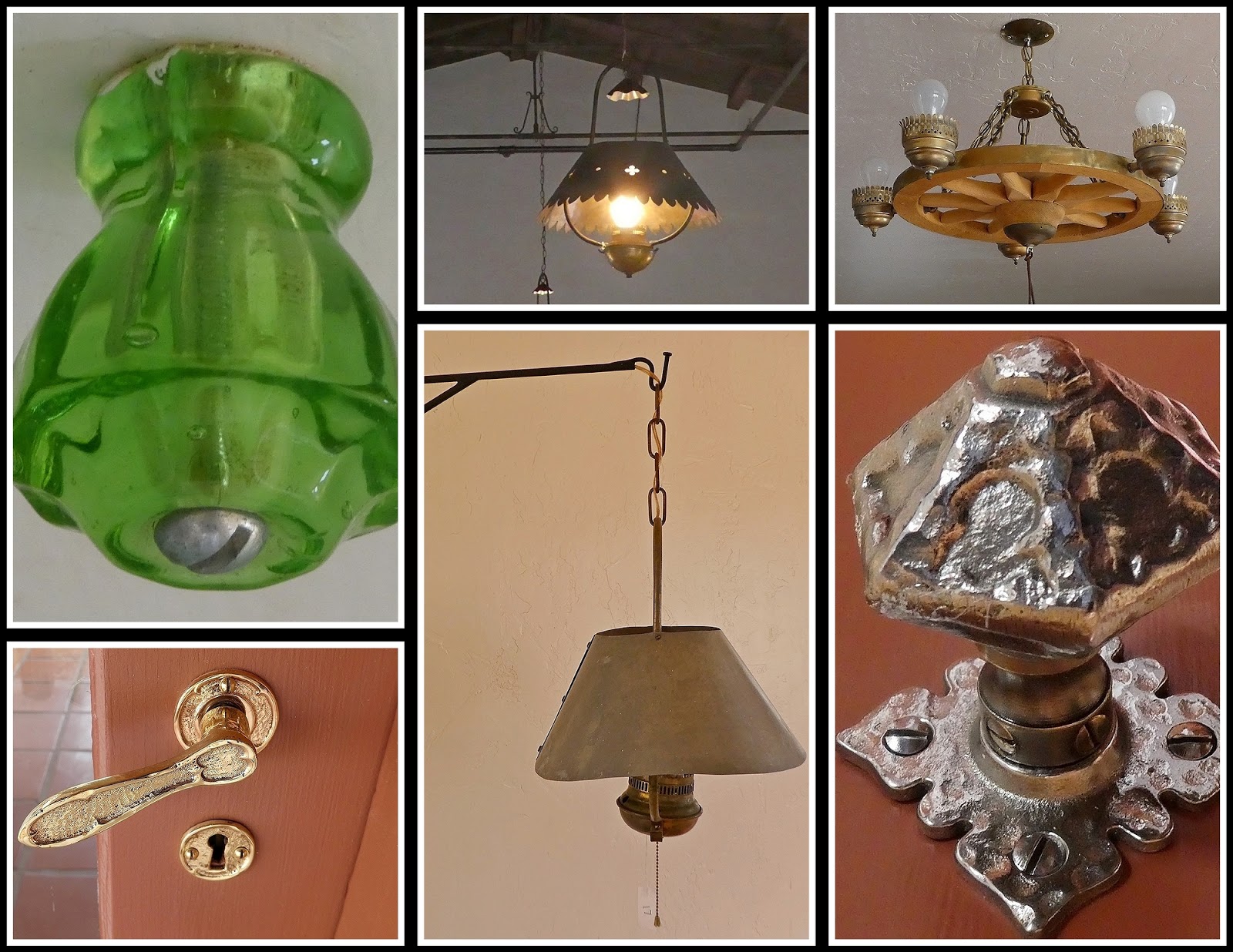
Polyptych Ranch Descriptions: Walking Box Ranch (bottom picture) is a 160-acre ranch that was the desert home of Hollywood stars Clara Bow and Rex Bell in the 1930s and 40s. Still in relatively good shape, the main building is a 5,000 square-foot, two-story Spanish Colonial Revival ranch house. In 1931 it was a 400,000 acre cattle ranch in the desert located about 6 miles west of Searchlight, Nevada.  At one time there was more than 1,800 head of cattle on the ranch. The facilities include a two-story home, barn, caretaker’s residence, guesthouse, swimming pool, tennis court, cactus garden and a covered patio with a built-in barbecue. Here are three polyptych's that showcase some of the interior rooms and details of the ranch's main house. 


Friday

Blake Smith - Hiking Partner & Friend

Polyptych Descriptions:  These two polyptychs are of one of my best friends and hiking partners, Blake Smith. The picture in the polyptych above are from hiking locations ranging from Death Valley, Grapevine Canyon to the Keystone Fault in Red Rock Canyon Park. Locations below were taken at Gold Butte, Cold Creek, Mt. Charleston, and the Rainbow Vista Road. There is hardly a hiking location withing a 90 radius of  Henderson we haven't hiked.
                         

Thursday

Town Jail - Rhyolite, NV


Polyptych Description: Off Broadway Street, the picture below is a picture of the Rhyolite jail. This substantial building had heavy steel doors and steel bared windows. The judge's office was in the front part of the building and six steel cells housed Rhyolite's rowdier residences in the rear. The window at the back of the building was as twice as wide as the side windows, and provided a "picture window" view looking over the full valley below the town. 


Wednesday

Bottle House - Rhyolite, NV


Polyptych Description: Shown below is Tom Kelly's 'Bottle House' in Rhyolite, NV.  Tom Kelly's house was erected in 1906. He built the three room house to raffle it off. It was built with 30,000 bottles of beer, wine, soda and medicine. Because the water line had yet to be laid, water was scarce and cost $5.00 a barrel. As a result, none of them had ever been washed. The house served the winning family for many years. Even though you cannot go into the house, you can peer into the inside through its windows, seen in the polyptych above. One was even draped with curtains. He even made a landing for the porch with bottles. when you got close up you could read the labels molded into the bottoms of the bottles. NOTE: This was not the only house built from bottles in Rhyolite. Just about 100 yards behind this one, was Mr. & Mrs. Wylies home. It was only one room but it was quite a nice little place made of beer bottles. There was also one up on the hill behind the school. That one was quite unusual in that it was mostly underground. Other than the roof, the rest of the house was made of bottles.


Tuesday

Bank of John S. Cook & Company - Rhyolite NV


Polyptych Description: This is the remains of the Cook & Co Bank in Rhyolite, NV. The Bank of John S. Cook & Company was first established in 1905 by John S. Cook, as a private bank, and with a capital of $50,000. Constructed in 1907 at a cost of nearly $90,000, the three-story John S Cook & Company Building was located on the southwest corner of Golden and Broadway (Ramsey Corner) Streets and was the tallest building in town. Completed and opened for business in January, 1908, the first floor housed the J S Cook banking corporation, which was shortly absorbed by the First National Bank of Rhyolite, Nevada. It had two vaults, marble floors imported from Italy, mahogany woodwork, electric lights, telephones, and inside plumbing.Brokers' offices utilized most of the second and third floors, while the town’s post office occupied the basement. The post office was the last business to leave the town in 1919. This polyptych shows some of the detail of the once magnificent building. It also shows the sidewalk that ran down the street in front of the entrance (lower right). The (lower left) picture shows the remains of the Jewelry store that was attached to the building. This is without doubt the most photographed building in Rhyolite. Unfortunately, this is all that is left of the building 112 years later.

Thursday

1917 Cadillac Type 55 Phaeton

1917 Cadillac
Findlay Cadillac Saab in the Las Vegas Valley Automall kicked off 2012 with the 7th annual Cadillac Through the Years classic car show, held at Las Vegas’ Town Square Mall. Folks were able to take a step back in time to take a look at Cadillac's dating back more than 100 years

Colin Christie, president of the Las Vegas Region of the Cadillac LaSalle Club showed of his 1917 Cadillac Type 55 Phaeton. Though the 2013 Cadillac XTS was suppose to be the highlight of the show, this beautifully restored specimen  drew major attention and was by far my favorite.  Every old car has a great story, and it's no different when speaking about the 1917 Phaeton, which cruises at about 50 mph.  He found it I Flint, Michigan after seeing an advertisement in a car magazine. According to Colin the owner had passed away 20 years earlier and his son had it. The engine needed some work, but the car had been restored 20 years before. That was then, this is now! Just Beautiful!
Cadillac Through The Years

Exposed

St Thomas School Polyptych

I created the two polyptychs here to help showcase some recent pictures taken at St. Thomas Nevada. A 10-year long drought has now exposed this ghost town that was once buried under more than 60 feet of water in the northeastern part of Lake Mead. To learn more go to my daytrip post at  … Daytrip - St Thomas, Nevada.

St Thomas Ice Cream Parlor Polyptych

Tuesday

They Just Keep Rolling Along

Wagon Wheels
The combination of pictures in this Polyptych, representing old ore wagons, hay wagons, and even a unicycle, were taken at four different times and locations over the past several years. Some were taken at the Techatticup Mining Camp located in Eldorado Canyon, Nevada, some near Wilson Canyon, Nevada, and some at Silverton, Colorado. Click the picture to enlarge.

Saturday

Happy Halloween

Halloween Polyptych 01
Halloween Polyptych 02

These two polyptychs were created using pictures taken at various fall displays at Bellagio’s Conservatory and Botanical Gardens. Click to enlarge.

Thursday

1963 Corvette Stingray

Stingray Polyptych
Along with the 1964 Jaguar XKE, this car used to be one of my all-time favorites. I created this Polyptych from a series of photos that I took at the 2011 Super Run Classic Car Show in the District at Green Valley.

Sunday

Grand Canyon Railway

Canyon Railroad Diptych
On 03/10/2009 we road the Grand Canyon Railway to the South Rim of the Grand Canyon. Expecting it to be more like Las Vegas weather, we were surprised when we woke up to a snow squall and that it turned out to be a rather cold, windy and blustery day. Out our window, and from the viewing platform at the rear, we got to see a variety of different landscapes, from Ponderosa pine forests down to the open and dry high desert. The train then rose back into the forest as it got closer to the canyon. There is more than a 1,500 foot change in elevation along the way. In the grand tradition of elegance and extraordinary comfort, we road the most exclusive seats on the train - inside the Luxury Parlor Car. Thanks to lounge-style comforts including a private bar and access to the open-air rear platform the exclusive service in this car provides fresh fruit, pastries, coffee and juice during the morning, finger snacks on the return trip along with a champagne toast and drinks of your choice at any time. The 4-1/2 round trip train ride made for a very enjoyable day.

Canyon Railroad Diptych-2
Description: the Grand Canyon Railway made its first journey to the South Rim in 1901, long before Arizona was dubbed the "Grand Canyon State." With the arrival of the train, people could get to the legendary canyon with ease and comfort. All supplies used in the construction of Grand Canyon Village came to Northern Arizona aboard the train. The train also brought all water to the Grand Canyon until 1926. Supplies were not the only things carried in trains. Ranching and lumber were the primary industries of the early 1900s. Ranchers and lumberjacks contracted with the Grand Canyon Railway to transport their stock. The Railway shared the countryside with its neighbors forming a unique bond. Cowboys, lumberjacks and shepherds alike felt a little better and closer to civilization just being able to hear the train or see its lights off in the distance.The train stopped running in 1968, giving way to the popularity of automobile travel. But like any legend it refused to die. As fate would have it, Grand Canyon Railway was reborn in 1989 when entrepreneurs brought the Grand Canyon's train back to life. Leaving from Williams Arizona, Grand Canyon Railway departs daily at 9:30 a.m. The train travels almost due north to the South Rim of Grand Canyon National Park, arriving at 11:45 a.m.. The trip measures 65 miles and takes 2 hours and 15 minutes each way, 45 minutes faster than in 1901 when the train made its first trip. The train departs Grand Canyon Depot at 3:30 p.m. returning to Williams Depot at 5:45 p.m.

Mosaic Marble Floors at the Bellagio Conservatory

Marble Floor Diptych
08/08/2011 – I captured these pictures at the Conservatory and Botanical Gardens summer exhibit entitled, “2011 Summer Garden”, inside the Bellagio Casino in Las Vegas, Nevada. One has to go early in the morning to get these pictures without several hundred visitors walking around. Technically, this is a type of polyptych, the term for all multi-panel works. A polyptych (Greek: polu- "many" and ptychÄ“ "fold") generally refers to a painting (usually a panel painting) which is divided into multiple sections, or panels. In recent times the term and concept has been added to the field of photography.